

The Difference Between Cedar, Mothballs & True Moth Prevention
April 3rd , 2026
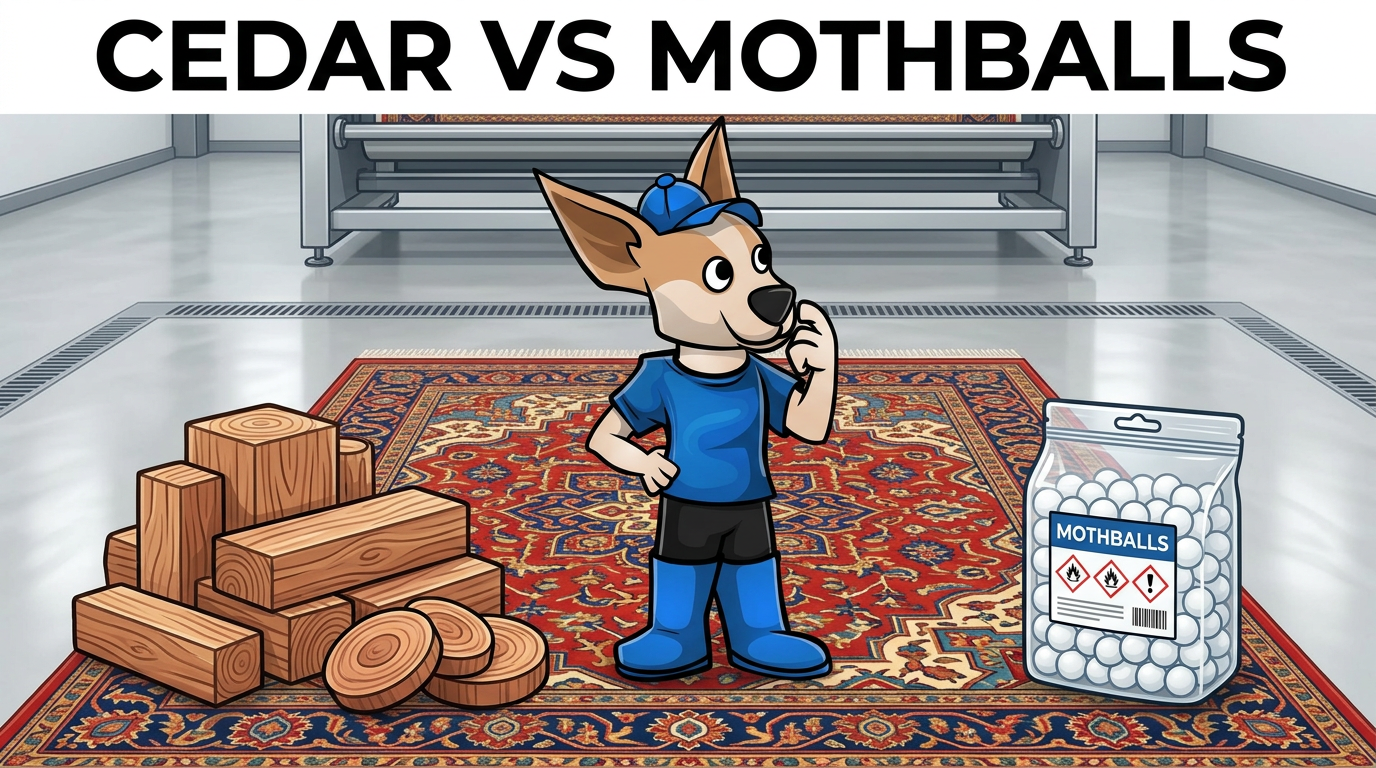
When homeowners worry about moth damage, one of the most common questions they ask is whether cedar or mothballs are the best way to protect rugs, carpets, clothing, and stored textiles. The truth is that cedar and mothballs are very different tools, and neither one should be confused with true long-term moth prevention. If you own wool rugs, silk rugs, fine clothing, or other natural fiber textiles, understanding the difference can help you avoid expensive damage before it starts.
At Around The Clock Rug Washing & Specialty Cleaning, we help Long Island homeowners protect valuable textiles from moth damage with a more complete approach. As a third-generation, family-owned company based in Farmingdale and serving the area since 1978, we know that preventing moths is not just about placing a product in a closet. Real prevention means understanding what attracts moths, what actually stops them, and how to protect textiles safely over time.
Cedar vs Mothballs
Cedar and mothballs are often grouped together, but they do very different things.
Cedar is generally the safer and more pleasant-smelling option. It is commonly used as a natural repellent and can help discourage moth activity, especially in small, enclosed storage spaces. Mothballs are much stronger and can be more effective at killing moths and larvae when used correctly in tightly sealed containers, but they also come with major drawbacks including odor, toxicity concerns, and strict usage limitations.
If you are comparing the two, the real question is not just “Which one works better?” It is “What am I trying to do?” If you are trying to lightly discourage moths in a closet, cedar may make sense. If you are trying to protect already-clean textiles in deep sealed storage, mothballs may offer stronger control. But if you want the best long-term protection for rugs, carpets, clothing, and household textiles, neither one is the full answer on its own.
Cedar Pros and Cons
Cedar is popular because it feels natural, smells good, and is easy to use in closets, drawers, and storage areas.
Pros of cedar
- Non-toxic and generally safe for homes with kids and pets when used normally.
- Pleasant woodsy scent instead of a harsh chemical smell.
- Can work as a mild natural repellent when the oils are fresh and the storage area is tight and enclosed.
- Can be refreshed with light sanding or cedar oil and reused for years.
Cons of cedar
- Does not reliably kill existing eggs or established larvae.
- Only mildly repels adult moths, so it is not a strong solution for active infestations.
- Becomes less effective as the scent fades, which means it needs regular refreshing.
- Works best as a support tool, not as a stand-alone prevention plan.
Cedar is best viewed as a helpful layer of protection, not a true treatment. It can support good storage habits, but it will not solve an infestation that is already active in rugs, closets, or textiles.
Mothballs Pros and Cons
Mothballs are far more aggressive than cedar, but that strength comes with tradeoffs.
Pros of mothballs
- Can kill moths and larvae when used correctly in tightly sealed containers or garment bags.
- Offer stronger protection than cedar for stored wool, fur, and other natural fiber items.
- Can provide long-lasting protection in deep storage situations.
Cons of mothballs
- Contain chemicals that produce toxic fumes.
- Strong odor can linger on clothes, fabrics, and in storage spaces.
- Must only be used in airtight containers according to label directions, not in open closets or everyday living spaces.
- Not ideal for bedrooms, active closets, or any area regularly used by people or pets.
Mothballs are not a casual household solution. They are much more limited in where and how they should be used, which is why many homeowners are uncomfortable relying on them for everyday prevention.
Which Makes More Sense?
For most homes, cedar plus strong housekeeping is the safer everyday baseline.
If you are storing everyday clothing in closets or protecting items in a home you actively live in, cedar usually makes more sense than mothballs because it is safer, easier to maintain, and more practical for routine use. But cedar alone is still not true prevention. It works best when paired with clean garments, sealed containers, regular vacuuming, and routine textile care.
Mothballs make more sense in a narrower situation: short-term or deep storage of already-clean wool, fur, or similar items inside a fully sealed container, where all safety directions are followed carefully. They offer stronger kill power, but most homeowners do not want the odor and risk that come with regular use in everyday spaces.
What True Prevention Means
True moth prevention goes beyond cedar blocks and mothballs.
Real prevention means reducing the conditions moths need to survive, protecting the textiles themselves, and catching activity early. Moths are attracted to natural fibers like wool and silk, but they are also drawn to the organic matter inside and around those fibers, including dust, body oils, pet hair, skin cells, and food residue. That is why clean textiles are always safer than dirty ones.
At Around The Clock Rug Washing & Specialty Cleaning, we offer a professional moth treatment that can be applied to textiles to help discourage future damage. In simple terms, it makes the fibers far less appealing to moths. This kind of professional textile protection is a much more effective long-term strategy than relying only on closet products, and it is a smart option for valuable rugs, specialty textiles, and natural fiber household items.
Why Professional Prevention Works
Professional prevention works because it focuses on the actual textile, not just the surrounding air.
A cedar block may mildly repel moths nearby, and mothballs may release fumes in a sealed space, but professional prevention is designed specifically for the fibers you are trying to protect. That matters when you are dealing with wool rugs, silk rugs, heirloom textiles, specialty garments, or other valuable items that can be permanently damaged by larvae.
For homeowners on Long Island, this is especially important when dealing with area rugs and other textiles that are not stored neatly in airtight bins. Rugs live on floors, under furniture, near baseboards, and in rooms where dust and pet hair collect. That is why true prevention is not just about what you place in the room. It is about professional cleaning, treatment, inspection, and ongoing care.
Best Long-Term Strategy
The best long-term strategy is a combination of cleanliness, textile protection, and regular inspection.
We always recommend a yearly routine inspection, especially for homes with wool rugs, silk rugs, stored clothing, pet hair, or dark undisturbed storage spaces. Moth activity is much easier to control when it is caught early, before visible holes and major textile loss occur.
Best practices for long-term moth prevention
- Keep rugs, clothing, and stored textiles clean.
- Vacuum closets, baseboards, rug edges, and under furniture regularly.
- Store seasonal garments only after they have been cleaned.
- Use sealed containers or garment bags for valuable natural fiber items.
- Use cedar as a light supplemental deterrent, not a full prevention plan.
- Use mothballs only with extreme care and only in properly sealed storage if appropriate.
- Schedule yearly inspections for early detection.
- Consider professional moth treatment for rugs and valuable textiles.
Why This Matters for Rugs
Area rugs are one of the most overlooked places for moth problems.
Unlike clothing in a closet, rugs often stay in the same place for years and develop hidden pockets of dust, pet hair, and debris beneath furniture and around edges. That makes them especially vulnerable if they are made from wool or silk. A homeowner may think their closet is the only concern, when in reality the most serious moth activity may be happening inside a rug.
That is why Around The Clock Rug Washing & Specialty Cleaning takes a textile-first approach to prevention. Our Farmingdale facility serves Long Island homeowners who want more than a basic cleaning. They want professional care, real protection, and a plan that helps preserve the life of their rugs and household textiles.
