

Moth Removal: DIY vs Professional
April 3rd , 2026
If you see any visible signs of moths in your rugs, carpets, closets, or clothing, you should treat the problem as an active infestation and bring in a professional service. Moth removal is not just about killing insects you can see. It is about identifying the source, treating the textiles correctly, removing eggs and larvae, and making sure the infestation is addressed both in the home and inside the affected fabrics.
At Around The Clock Rug Washing & Specialty Cleaning, we understand that moth infestations are not just a pest problem. They are also a textile problem. For Long Island homeowners, the biggest mistake is treating moths as only a bug issue when, in reality, much of the infestation lives deep inside rugs, clothing, stored textiles, and hidden fiber surfaces. That is why successful moth removal usually requires both professional textile cleaning and licensed pest control working together.
As a third-generation, family-owned company serving Long Island since 1978, our team has seen how destructive moths can be to wool rugs, silk rugs, carpets, and valuable clothing. Moths can quietly live and feed in undisturbed areas for weeks or months before homeowners even realize there is a problem. By the time people notice holes, thinning fibers, or small signs of debris, the infestation may already be well established.
Do I Need Professional Moth Removal Service?
Yes — if you see visible signs of moths, you need professional service.
This is especially true if you notice:
- Adult moths flying around closets, rugs, furniture, or baseboards
- Small holes in wool rugs, silk rugs, carpets, sweaters, coats, or other natural fiber textiles
- Dust-like debris, frass, webbing, or larvae near the damaged area
- Repeated signs of activity even after vacuuming or using store-bought products
The reason professional help matters is simple: moth infestations are rarely solved by one step alone. In most homes, about 70% of the moth removal process is detailed cleaning, while the other 30% is pest control. If you only spray for moths but do not properly clean the affected textiles, rugs, and hidden areas, eggs and larvae can remain behind. If you only clean but do not address the infestation in the home itself, moths can keep returning.
That is why homeowners should find an expert textile cleaning company that understands moth infestations and works with a trusted pest control partner. You do not want two unrelated companies each handling half the issue without coordination. The best outcome comes from a one-stop approach where textile cleaning and pest treatment are aligned, thorough, and based on experience.
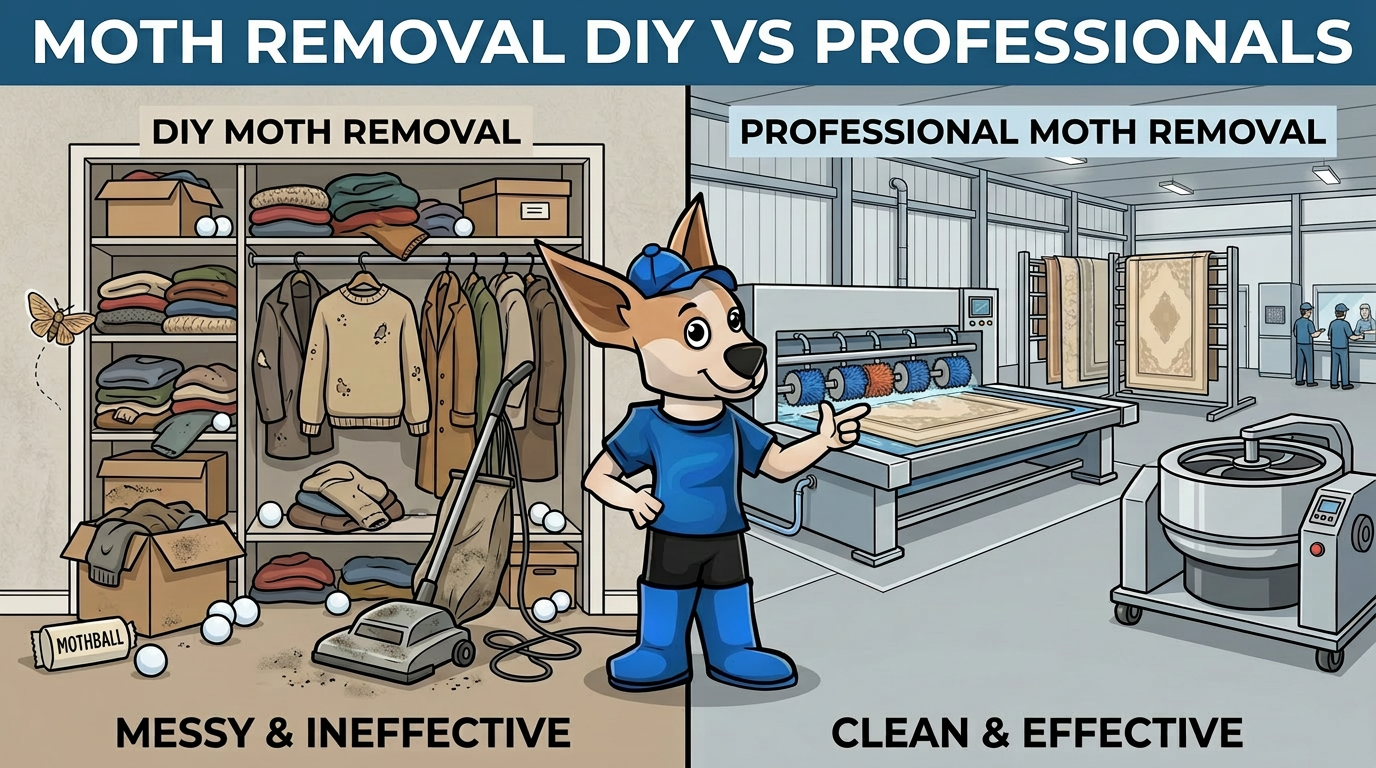
DIY Moth Removal vs Professional Moth Removal
DIY moth removal can help with early prevention, but it is usually not enough for an active infestation.
What DIY can help with
- Vacuuming baseboards, under furniture, closets, and rug edges
- Washing or isolating clothing before damage spreads
- Reducing lint, pet hair, dust, and organic debris that moth larvae feed on
- Monitoring storage areas and dark spaces more often
Where DIY usually falls short
- It does not reliably kill all eggs and larvae hidden deep in rugs or dense textiles
- It often misses the source of the infestation
- Over-the-counter products may be too weak, improperly applied, or unsafe for delicate textiles
- Homeowners may accidentally damage wool, silk, or specialty rugs while trying to self-treat them
This is where professional service becomes critical. Valuable rugs, heirloom textiles, and natural fiber carpets need treatment that is effective against moths but also safe for the material itself. A strong treatment is useless if it destroys the rug in the process.
How to Remove Moths Permanently
To permanently remove moths, you need to treat both the textiles and the home environment.
On textiles
There are three primary ways a textile cleaning professional can remove moths from rugs, carpets, and clothing:
- High heat treatment
This is one of the most effective methods when done correctly by a professional. The treatment must reach the right temperature throughout the textile, not just on the surface. - Freezing protocols
Professional freezing is not the same as casually placing an item in a household freezer. It must be done properly, often in repeated cycles, to target the full moth life cycle. - Specialized moth-targeting solutions
A professional may use a textile-safe treatment designed to eliminate moth activity without harming delicate fibers like wool or silk.
In the home
A licensed pest control company should inspect and treat the home itself. This is essential because even if a rug or garment is professionally treated, the infestation can continue if moths remain active in closets, under furniture, along baseboards, behind stored items, or in other dark undisturbed spaces.
Permanent moth removal is really about complete control, not a quick fix. The goal is to break the lifecycle of eggs, larvae, and adults while removing the organic matter and nesting conditions that allow moths to thrive.
Why Cleaning Matters So Much
One of the biggest reasons moth treatment fails is because people underestimate how much cleaning is involved.
Moths are drawn to natural fibers, but they are also attracted to the conditions surrounding those fibers. Dust, skin cells, hair, food residue, and pet dander all create an environment where larvae can survive. Even synthetic carpeting can support moth activity if it contains enough trapped organic debris.
That is why the cleaning side of the process is so important. Professional textile cleaning does more than make a rug look better. It removes deeply embedded contaminants, helps eliminate eggs and larvae, and gives technicians a chance to inspect the full textile for damage, weak spots, and active infestation. For area rugs especially, proper off-site rug washing is often far more effective than surface-level treatment in the home.
At Around The Clock Rug Washing & Specialty Cleaning, this is where our experience matters. Our facility in Farmingdale is built to properly wash, inspect, and care for specialty rugs and textiles. When moths are involved, the goal is not cosmetic cleaning. The goal is true decontamination and protection.
Can Moth Damage Be Repaired After Removal?
In many cases, yes.
Once the infestation is fully under control, moth-damaged rugs can often be repaired, especially if the damage is caught early. Wool rugs and many handwoven rugs may be candidates for reweaving, patching, edge rebuilding, or other specialty repairs. Clothing and household textiles may also be salvageable depending on the fiber type, construction, and extent of damage.
The key is that repair should never happen before the moth issue is resolved. If the larvae, eggs, or conditions that attracted them are still present, repaired areas can become damaged again. That is why proper cleaning, treatment, and inspection always come first.
Stopping Moths From Returning
Stopping moths from returning requires long-term prevention, not just one-time treatment.
Moths can be difficult to permanently eliminate, and like any pest, they can re-enter your home in the future. Even after a successful treatment, no one can honestly promise that moths will never come back. What you can do is make your home far less inviting and catch future activity early.
Best ways to reduce the risk of another infestation
- Have your home routinely inspected by a pest control company familiar with moth activity
- Clean rugs, closets, and storage areas regularly
- Avoid leaving wool, silk, or natural fiber items undisturbed for long periods
- Inspect under furniture, along rug edges, and in dark storage areas
- Professionally wash rugs and specialty textiles when needed
- Store valuable clothing and textiles clean, not dirty
- Act quickly at the first sign of adult moths, larvae, or textile damage
Routine prevention is especially important in homes with fine rugs, wall-to-wall carpet, seasonal clothing, pet hair buildup, or long-term textile storage.
Why Long Island Homeowners Choose Around The Clock
Moth removal is not a standard cleaning job. It requires knowledge of textiles, infestation behavior, safe treatment methods, and real coordination with pest control.
Around The Clock Rug Washing & Specialty Cleaning has been serving Long Island since 1978, and our team understands how to inspect, wash, and protect valuable rugs and textiles. As a third-generation family business based in Farmingdale, we work with homeowners who need more than a surface clean. They need a company that understands specialty fibers, moth-related textile damage, and the importance of handling the problem correctly from the start.
If moths have affected your rugs, carpets, or clothing, the right solution is not just pest removal. It is a complete plan that combines expert textile cleaning with trusted pest control support so the infestation is treated thoroughly and the damaged items have the best chance of being saved.
