

Pet Urine 101: Causes, Damage, and Why DIY Doesn’t Work
March 23rd, 2026
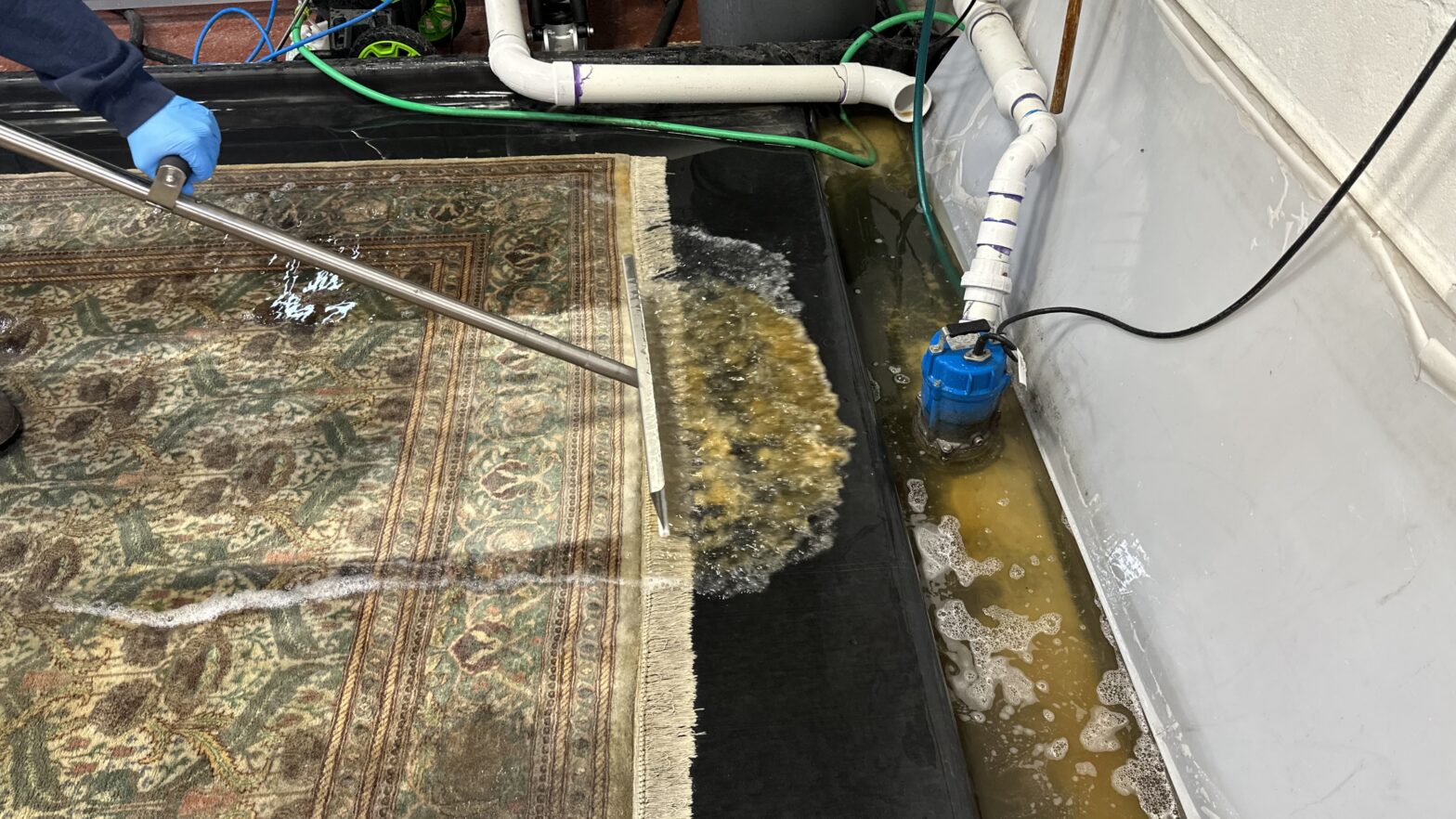
Pet urine is one of the most misunderstood cleaning problems in homes and businesses. At Around The Clock Rug Washing & Specialty Cleaning Services in Farmingdale, NY, we’ve treated thousands of pet urine‑damaged rugs and carpets and have helped homeowners from Long Island and surrounding areas eliminate even the worst odors. In this guide, we’ll break down the causes, long‑term damage, and explain why DIY and most “steam cleaning” services simply don’t work the way you think they do.
Why Does My Carpet Still Smell After Cleaning?
If your carpet still smells after cleaning, it means the odor source was not completely removed or the wrong cleaning chemistry was used. Surface‑level shampooing or spot cleaners often only mask the smell instead of neutralizing the actual urine salts trapped deep in the carpet and pad.
Another common cause is slow drying times after the cleaning process. When the carpet stays wet too long, that moisture can create a mold and mildew smell that mimics or worsens the original urine odor. This is why professional extraction, proper pH‑balanced cleaning solutions, and rapid drying are critical for a true odor kill rather than just a temporary cover‑up.
Why Does My Rug Still Smell After Cleaning?
When cleaning a rug at home whether you do it yourself or bring in a basic “professional” cleaner you’re usually only cleaning the top of the rug. If you have a pet urine issue, that urine is not just in the surface fibers; it soaks into the middle of the rug and even the foundation (backing or weave).
Home‑style extraction and spot‑cleaner foams simply cannot reach deep enough to flush out these trapped urine salts. As humidity changes or the rug is walked on, the residual salts reactivate and release odors again. That’s why “I’ve cleaned it three times and it still smells” is such a common complaint because the problem is hiding under the visible surface, not on top of it.
Why Steam Cleaning Doesn’t Remove Pet Urine?
Steam cleaning is a very effective method for removing dirt, oils, and general soiling from carpets and rugs, but it does not reliably remove pet urine odors. The reason is chemistry: when urine dries, it forms uric acid crystals that become highly alkaline (pH 10–12).
These salts are resistant to the neutral‑pH detergents and hot water used in most steam cleaning systems. To truly break them down, you need a strong acidic solution or specialized enzymatic bio‑treatment that is designed to neutralize high‑alkaline salts and digest the organic components of urine. Without this targeted chemistry, the “steam cleaned” rug may look clean but will still smell every time it gets damp or the indoor humidity rises.
How Pet Urine Causes Long‑Term Damage?
Pet urine does far more than just cause odors; it can permanently damage your rugs and flooring over time. On area rugs, especially those made of natural fibers like wool or silk, the high alkalinity of urine can cause:
- Dry rot in the foundation and backing, leading to puckering, fraying, and structural breakdown.
- Color bleeding and fading as the pH change attacks dyes.
- Mold and mildew growth in the weave and backing due to trapped moisture and organic waste.
These secondary biological issues can spread unseen within the rug’s structure, actively weakening fibers even if the surface looks fine. Over time, this can turn a repairable problem into a permanent, irreversible loss of the rug’s integrity.
Do I Need to Replace My Carpet Because of Pet Urine?
The question “Do I need to replace my carpet?” is one we hear often. The answer: it depends on the severity and how early the problem is treated.
In many cases, wall‑to‑wall carpet can be saved, especially if the urine has not deeply saturated the pad or compromised the subfloor. Professional extraction using the correct chemistry, deep flushing, and controlled drying can often restore the carpet without ripping it out. However, if the pad is heavily contaminated or the subfloor has been damaged, full replacement may be necessary for health, odor control, and structural reasons.
Either way, it’s best to ask a professional carpet cleaner for an on‑site assessment before deciding to remove any carpet. At ATC Rug Washing & Specialty Cleaning, we inspect the extent of the urine saturation, test the underlying pad and subfloor when needed, and give you a clear recommendation — whether that’s deep cleaning, partial repair, or replacement.
Why DIY and Off‑The‑Shelf Solutions Don’t Work
Most DIY kits and retail spot‑cleaners are designed primarily for surface stains, not deep bio‑chemical neutralization. They often contain:
- Enzymes that are too weak or diluted to handle large urine volumes.
- Neutral‑pH detergents that don’t touch high‑alkaline salts.
- Directions that ignore the need for proper dwell time, agitation, and thorough rinsing.
Even well‑meaning homeowners can end up “washing” the urine deeper into the rug, locking it between fibers and the backing. This is why so many people say, “I’ve tried everything, and it still smells” — because the product they used simply wasn’t engineered for the real chemistry of pet urine damage.
How Around The Clock Rug Washing Fixes Pet Urine Issues
At Around The Clock Rug Washing & Specialty Cleaning, we specialize in full‑submersion cleaning and deep structure treatment for pet urine‑damaged rugs and carpets. Our process is designed specifically to address the problems described above:
- Deep extraction and flushing of the rug’s middle and foundation, not just the surface.
- Use of pH‑specific chemistry and enzyme treatments to neutralize high‑alkaline urine salts and break down organic waste.
- Professional drying systems that prevent lingering moisture and the risk of mold and mildew.
- Inspection and treatment of both area rugs (sent to our facility) and carpeted floors in your home or business.
We stand behind our work with a 100% Odor Removal Guarantee on pet urine, because we treat the true source of the problem, not just the symptoms you can see or smell.
What You Should Do If Your Carpet or Rug Still Smells
If your carpet or rug still smells after cleaning, the next step is not to clean it again arbitrarily — it’s to get a professional assessment. Here’s what we recommend:
- Stop using more DIY products that just add more chemicals and moisture.
- Avoid soaking the area again with water or steam unless done by a professional.
- Call a specialist who understands pet urine chemistry and deep‑structure treatment.
At Around The Clock, we offer in‑home inspections for wall‑to‑wall pet urine issues and full‑facility rug washing for urine‑damaged area rugs. If you’re in Farmingdale, NY or anywhere on Long Island, you’re already in our service area for professional pet urine damage assessment and treatment.
Final Thoughts: Don’t Let Pet Urine Ruin Your Floor Coverings
Pet urine is a chemical and structural problem, not just a “smell” you can cover up. DIY methods and basic steam cleaning often fail because they don’t:
- Fully remove urine from the middle and foundation of rugs.
- Neutralize the high‑alkaline salts that cause re‑odor.
- Prevent long‑term dry rot and mold growth.
If you’re dealing with a pet urine issue on either carpet or an area rug, reach out to Around The Clock Rug Washing & Specialty Cleaning in Farmingdale, New York, for a professional evaluation and long‑term solution — so you can keep your rug and your peace of mind.
