Around The Clock

What Happens to a Rug After a Basement Leak? A Connecticut Homeowner’s First 48 Hours

August 24th, 2026
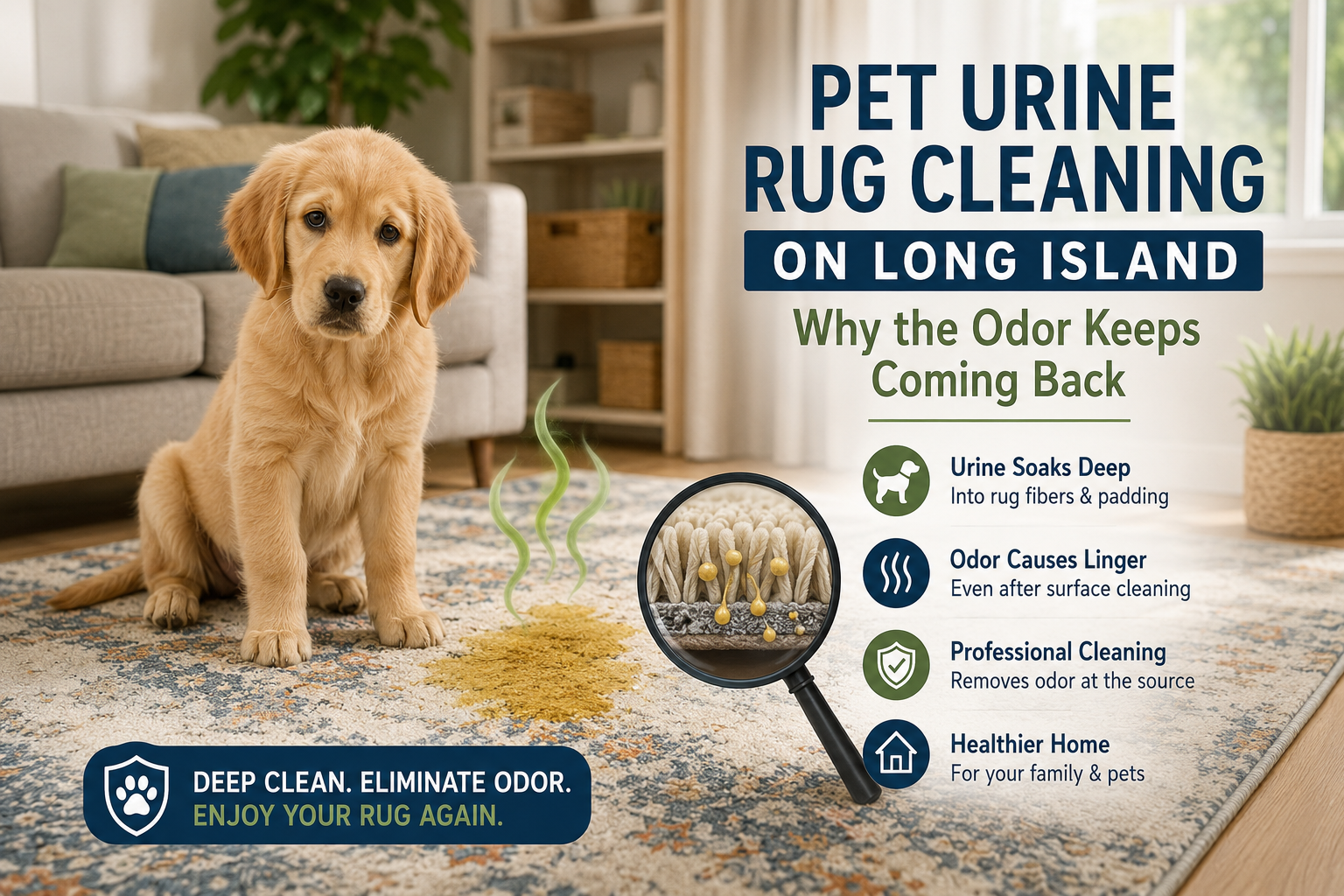
Golden Retriever puppy sitting on an area rug in a Long Island home with an infographic explaining why pet urine odors return and how professional rug cleaning removes odors from deep within the rug fibers and padding.

A basement leak can turn a beautiful rug into a much bigger problem faster than most homeowners expect. The first 48 hours matter—not because every wet rug is automatically ruined, but because the water source, the rug’s construction, what’s underneath it, and how quickly it’s handled all affect whether it can be restored.

For Connecticut homeowners, the scene may be familiar: a heavy storm, a failed sump pump, a pipe leak, a water heater problem, or slow seepage that went unnoticed until the basement started smelling a little… basement-y.
Then there’s the rug.
It’s soaked. It’s heavy. It may be sitting on a wet pad. And it’s definitely not something to throw in the sun, hit with a rental cleaner, and hope for the best.
At ATC Rug Washing, we help homeowners assess rugs after water exposure and determine the appropriate next step. Some rugs can be professionally washed, decontaminated, dried, and returned to service. Others may have contamination, mold growth, backing failure, or structural damage that makes restoration impractical.

The key is getting good information quickly—not making a panicked decision with a box fan and a bottle of carpet deodorizer.

First, Stop the Water and Make the Area Safe

Before worrying about the rug, stop the source of water if it’s safe to do so.
That may mean shutting off a supply valve, turning off your home’s main water line, calling a plumber, or dealing with a failed sump pump. If outlets, appliances, electrical equipment, or wiring may have been affected, don’t walk into standing water or start moving things around until the area is safe.
Next, consider the source of the water. Not all water exposure is the same

Clean water may come from a broken supply line, appliance leak, or similar source that hasn’t been contaminated.
Gray water may come from a washing machine, dishwasher, shower, or another used-water source. It can contain contaminants, even if it doesn’t look particularly alarming.
Black water includes sewage, toilet overflows, outdoor flooding, river or stream water, and water that may contain bacteria, chemicals, or other hazardous material.

A wool rug that got wet from a clean pipe leak is a very different situation from a rug that sat in a sewer backup or stormwater that came in through the basement door.
If the water is contaminated (you can’t confidently identify where it came from) don’t drag the rug through your home, try to shampoo it, or let kids and pets near it. You may need a qualified water-damage restoration professional to address the affected area before you decide what to do with the rug.

The U.S. Environmental Protection Agency advises homeowners to dry wet materials promptly, noting that mold can grow on carpeting, furniture, wood, drywall, and other materials that remain wet for more than 24 hours.

The First 24 Hours: What’s Happening Inside the Rug

A wet rug isn’t simply damp on the surface. Water can travel through the pile, foundation, backing, fringe, pad, and floor beneath it. A hand-knotted wool rug absorbs water differently than a machine-made rug with glued backing. A viscose rug can react differently than wool. A rug with foam or rubber backing may trap moisture where you can’t see it. And a wet rug pad can keep feeding moisture into the rug long after the top starts to feel dry.

That’s why “it doesn’t look too bad” isn’t a reliable test.

What homeowners often miss

Moisture trapped between the rug and the pad.
Water sitting beneath the pad on hardwood, vinyl, laminate, concrete, or wall-to-wall carpet.
Dye instability in hand-dyed, antique, or delicate rugs.
A wet fringe or cotton foundation that dries far more slowly than the pile.
Adhesive breakdown in machine-made rugs with secondary backing.
Odor that appears later, once moisture, bacteria, and residue have had time to settle in.
A humid basement environment that slows drying long after the standing water is gone.

If the rug is small enough to move safely and the water was known to be clean, carefully remove it from the wet area. Don’t fold or tightly roll it while it’s soaking wet—that traps moisture inside and can create a much nastier problem later.

If it’s a large rug, an antique, a silk rug, a wool-viscose blend, or a rug you’d be genuinely upset to replace, take photos before moving it. Photograph the front, back, affected areas, fringe, pad, and floor beneath it. Those photos can help with a professional assessment and may be useful for an insurance claim.

The Rug Pad Might Be the Bigger Problem

In many basement leaks, the rug is only half the story. The pad underneath can be where the real moisture problem lives.
Rug pads can hold water, create a musty odor, transfer discoloration, and keep both the rug and floor from drying properly. Foam, rubber, felt, and combination pads all react differently after water exposure. A pad may look harmless from above while holding a surprising amount of water underneath.

That’s why putting a few fans in the room while leaving the rug and pad in place usually isn’t enough. The surface may feel dry while moisture remains trapped below.

If water reached the pad:

Lift the rug carefully instead of dragging it across the floor.

Separate the rug from the pad if you can do so safely.

Remove the pad from the affected area for evaluation.

Check the floor beneath for standing water, staining, warping, dampness, or odor.

Don’t put the rug back over a pad or floor that’s still wet.

The EPA recommends prompt drying and cleanup after water damage. Airflow and dehumidification can help with drying the space, but they don’t replace a proper assessment of the rug, pad, and flooring below.

The 24-to-48-Hour Window: When It Becomes a Restoration Decision

People talk about “48 hours” as if a clock hits zero and every rug instantly becomes unsalvageable. It’s not quite that simple.
But the longer a rug stays wet, the higher the risk of odor, mold growth, dye migration, backing deterioration, browning, and structural damage. That’s why waiting a few days to see if it “airs out” usually isn’t the move.

Whether a rug can be saved depends on several things:

The source and category of the water.

The rug’s fibers: wool, silk, cotton, viscose, synthetic fibers, or blends.

Its construction: hand-knotted, hand-tufted, machine-made, hooked, flatwoven, backed, or unbacked.

Its age and condition before the leak.

Whether it has latex, glue, foam, rubber, or another secondary backing.

How long it sat wet.

Whether it was rolled, folded, stacked, or left on a saturated pad.

Whether there are signs of dye bleed, delamination, mold, odor, or structural damage.

A professional textile cleaner shouldn’t look at a wet rug and automatically promise, “No problem.” The right approach is to evaluate the individual rug.
For example, a hand-knotted wool rug exposed briefly to clean water may be a strong candidate for professional washing, controlled extraction, and drying. A machine-made rug with a saturated glue-backed construction may have a very different outlook. Its backing may break down, separate, ripple, or continue producing odor long after the visible water is gone.
If the rug was exposed to sewage, outdoor floodwater, or another contaminated source, the issue is no longer just cosmetic. It becomes a contamination and safety question. In that case, call qualified restoration professionals and get guidance before you try to save, transport, or clean the rug.

What Not to Do With a Wet Rug

A basement leak makes people panic. That’s understandable. But panic is how a wet rug ends up in a hot garage, rolled into a tight burrito, and “cleaned” with three gallons of soap.
Here’s what not to do.
Don’t use a rental carpet cleaner

A rental machine may remove some surface moisture, but it can’t replace proper water extraction, full washing, controlled drying, or an assessment of the rug’s foundation and backing.

On a delicate, handwoven, or specialty-fiber rug, the wrong cleaning method can create new problems while the original moisture issue remains underneath.

Don’t shampoo it in place
Shampooing adds more moisture to an already compromised textile. It can also leave detergent behind, push residue deeper into the rug, and increase the risk of browning, dye bleed, or lingering odor.

Don’t leave it rolled up in the garage

A rolled wet rug is a moisture sandwich. It traps humidity, odor, and contamination inside the pile and foundation.

If the rug needs to be moved, take photos first and ask a professional for guidance based on its size, fiber type, construction, and water exposure.

Don’t blast it with direct heat

Space heaters, hot garages, and aggressive heat sources can cause shrinkage, distortion, dye migration, brittle fibers, or backing damage. Proper drying means controlled airflow and moisture removal—not trying to bake the rug dry.

Don’t assume a musty smell will disappear

A musty smell is a clue, not a personality trait of old basements. It may mean moisture remains in the rug, pad, floor, or building materials below. Fragrance sprays don’t solve that problem. They just make the problem smell like lavender for a while.

How Professional Rug Washing Helps

ATC Rug Washing doesn’t clean rugs in a Connecticut basement or try to solve a water-loss situation with a surface-only treatment.
Depending on the rug and the situation, that process may include:

Pre-inspection and documentation

We examine the rug’s fibers, foundation, dyes, fringe, backing, prior wear, water exposure, odor, and visible damage. This helps us determine whether professional washing is appropriate and what precautions the rug requires.
Dry-soil removal, when appropriate

Even a wet rug can contain embedded dry particulate soil. A proper cleaning process starts with understanding what’s in the rug—not just what’s visible on top.

Targeted washing and decontamination
Wool, silk, cotton, viscose, synthetic fibers, and delicate dye systems don’t all get the same treatment. The cleaning approach should match the individual textile, not the technician’s favorite machine.
Thorough rinsing and professional extraction
Removing soil, residue, and excess moisture is essential. ATC uses professional centrifuge extraction as part of its facility process to remove moisture efficiently and help prepare the rug for controlled drying.

Controlled drying

A rug needs to dry completely and evenly. Controlled drying helps reduce the risk of lingering moisture, odor, browning, distortion, and other moisture-related issues.

Post-cleaning evaluation

Once the rug is cleaned and dried, we evaluate the results and explain any conditions that were already present or became visible after the water exposure.

The key phrase is “when appropriate.” We won’t make a blanket promise to restore a rug that has been heavily contaminated, structurally compromised, or exposed to water conditions that make restoration unsafe or impractical.

A Connecticut Basement Leak Needs a Professional Plan

When there’s water in the basement, you don’t need more drama. You need a clear order of operations.
  1. Stop the water source and make the area safe.
  2. Identify the water source, or at least avoid guessing.
  3. Keep people and pets away from contaminated water.
  4. Remove the rug from ongoing moisture if it’s safe to do so.
  5. Separate the rug from the pad and inspect the floor beneath it.
  6. Take photos of the rug, pad, water source, and affected area.
  7. Start drying the space quickly.
  8. Contact the right professionals: plumber, restoration company, insurance carrier, and rug-washing specialist, depending on what happened.
The goal isn’t to make the rug feel dry by tomorrow. It’s to address moisture, contamination, and hidden conditions before they become odor, mold, or permanent damage.

Need Help With a Water-Damaged Rug in Connecticut?

If your rug was exposed to a basement leak, ATC Rug Washing can help you determine whether it may be a candidate for professional facility washing.

We provide pickup and delivery for Greenwich, Old Greenwich, Riverside, Cos Cob, and select Fairfield County communities. Rugs are washed at ATC’s dedicated Long Island facility—not surface-cleaned in your basement.

For the fastest initial assessment, send us:

A full photo of the front and back of the rug.

Close-up photos of the affected area, fringe, backing, and visible stains.

The rug’s approximate size.

Photos of the pad and floor underneath, if possible.

The water source, if known.

How long the rug was wet.

Whether the rug has already been treated, dried, cleaned, rolled, or moved.

A basement leak is stressful enough. Figuring out what to do with your rug shouldn’t be a guessing game.

Frequently Asked Questions

Can a rug be saved after a basement leak?

Sometimes. A rug exposed briefly to known clean water may be a good candidate for professional washing and controlled drying, especially if it’s removed from the wet area quickly. The final answer depends on the water source, the amount of time the rug was wet, its fibers, construction, backing, pad, prior condition, and whether contamination is present.

How quickly should I remove a wet rug after a leak?

Remove it as soon as it’s safe to do so. First, stop the water source, address any electrical hazards, and avoid exposure to contaminated water. If the water was clean and the area is safe, moving the rug away from standing water and separating it from a wet pad can help limit additional moisture absorption.

Is a rug ruined after 48 hours?

Not automatically. But the longer a rug remains wet, the higher the risk of mold, odor, dye migration, backing deterioration, and structural damage. The EPA notes that mold can grow on wet carpeting, furniture, wood, and other materials after more than 24 hours of moisture exposure, which is why prompt drying and professional evaluation matter.

Can I dry a wet rug with fans and a dehumidifier?

Fans and dehumidifiers can help dry the room, but they may not remove moisture trapped in the rug’s foundation, backing, pad, or flooring beneath it. If the rug is valuable, heavily saturated, delicate, or exposed to contaminated water, it’s best to get professional guidance.

Should I roll up a wet rug to move it?

Usually, no. Rolling up a soaking-wet rug can trap moisture, odor, and contamination inside. If you need to move a large or valuable rug, take photos first and contact a rug-care professional for handling advice.

Can ATC clean a rug exposed to sewage or floodwater?

It depends on the nature and extent of the contamination. Sewage, outdoor floodwater, and other potentially contaminated water sources require additional safety considerations and may make restoration inappropriate. Send photos and details before transporting the rug or attempting any DIY cleaning.

Does ATC provide basement water extraction or structural drying?

No. ATC specializes in professional rug washing and specialty textile care. For active water removal, structural drying, mold concerns, or contaminated-water cleanup, contact a qualified water-damage restoration company. Once the rug can be safely assessed, ATC can advise whether facility washing may be appropriate.

Do you pick up wet rugs in Connecticut?

ATC provides pickup and delivery for Greenwich and select Fairfield County communities. Pickup availability depends on location, rug size, water exposure, and safe handling requirements. Send photos, your rug’s dimensions, your address, and details about the water source for an initial assessment.

About the Author

Pat Santoro Jr., Master Textile Cleaner and Owner of ATC Rug Washing
After ATC expanded into professional rug washing, Pat developed hands-on expertise in textile identification, rug construction, cleaning chemistry, dye behavior, pet urine decontamination, professional dusting, facility washing, centrifuge extraction, and controlled drying.
Pat built training and operating systems that allow the ATC team to evaluate each rug individually and follow a consistent cleaning process.

He is also a co-founder of the Textile Cleaning and Restoration Education Institute. TCREI was established to advance technical education and professional standards for cleaners working with rugs, carpets, upholstery, and specialty textiles.

Through ATC, Pat helps Long Island homeowners, interior designers, and cleaning professionals make informed decisions about the care of valuable and delicate furnishings.

GET YOUR FREE QUOTE TODAY!

GET $25 OFF YOUR
NEXT RUG WASH

You are agreeing to receive SMS customer care and marketing notifications from Around the Clock Rug Washing. Message frequency may vary. Standard Message and Data Rates may apply. Reply STOP to opt out. Reply Help for help. atcrugwashing.com/privacy-policy