

How to Make Any Rug Stain Resistant (And Keep It That Way)
July 3rd, 2026
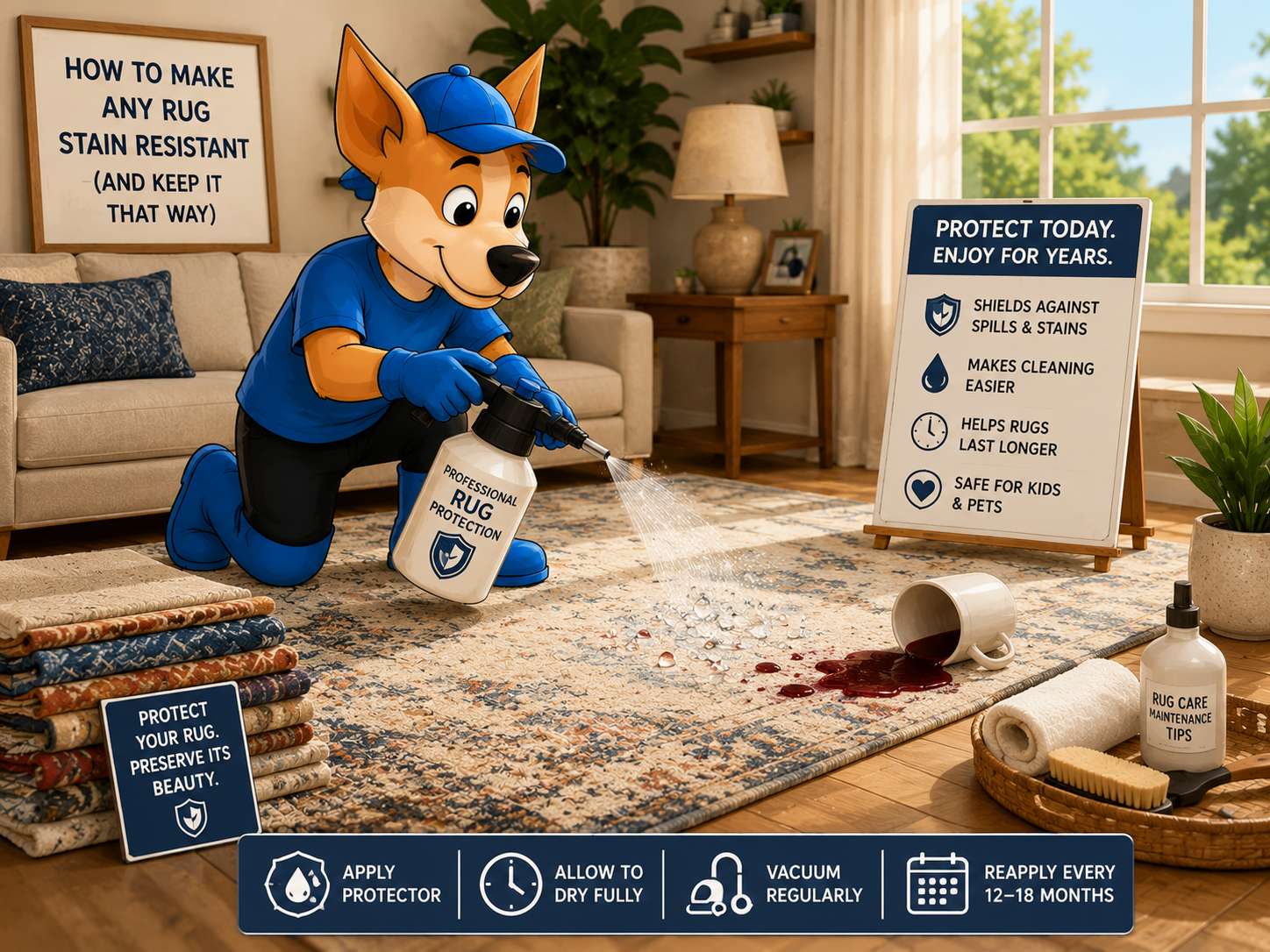
Making a rug stain resistant comes down to one move: seal every fiber before the first spill, not after.
The fiber gets you partway. A professional protection treatment finishes the job—an invisible barrier that makes spills bead up and blot off instead of soaking into the pile and the backing.
For a Long Island house with kids, pets, a sunroom, and coastal damp, that’s the single best thing you can do to keep any rug looking new.
At ATC Rug Washing, we treat new and existing rugs alike. I’ll show you which fibers fight stains, and how to lock that resistance in for good.
What Actually Makes a Rug Stain Resistant?
I co-founded TCREI, the Textile Cleaning Research and Education Institute, where the standards for fabric care in this industry get written. So when I tell you how rugs hold up, it’s not a guess.
A rug is stain resistant when liquid and soil stay on top of the fibers instead of sinking into the pile and the backing. Some fibers do that better by nature. None do it forever on their own.
Here’s the part the showroom won’t say. No rug is stain-proof off the floor. Even the ones labeled “stain resistant” lean on a factory finish that wears thin under foot traffic, vacuuming, and plain friction.
That’s the gap a professional treatment closes. We put a real barrier on top of the factory finish, so a merely stain-resistant rug turns into one that repels what daily life throws at it.
What Is the Most Stain Resistant Rug Fiber?
High-performance synthetics win in 2026. Solution-dyed nylon, polypropylene, and solution-dyed acrylic all beat natural fibers like wool, silk, and viscose at fighting stains.
- Solution-dyed nylon has the color built all the way through the fiber, so it resists fading and shrugs off harsh cleaning, and the dense polymer slows a spill down so you have time to clean it before it sets.
- Polypropylene (olefin) repels moisture and resists water-based stains by nature.
- Wool looks rich and lasts, but it drinks up liquid—so protection isn’t optional on it.
The fiber is a head start. The protection is what keeps that resistance from wearing thin.
How Do You Make a Rug You Already Own Stain Resistant?
You have it professionally treated. We apply a commercial-grade fluorochemical barrier straight into the full fiber structure, so spills, oils, and dry soil stay on the surface.
It works on the rug you’ve had for years and the one you buy tomorrow. Best time to do it: right after purchase, or right after a professional deep clean. Treat a dirty rug and you lock the soil in—always start clean.
For a house with kids and pets, this is the whole game. Juice, mud, body oils, pet accidents—those are exactly what the barrier repels. Instead of scrubbing a set-in stain, you blot it with a dry white towel and walk away.
Take the wool runner we treated for a family in Garden City. Their designer speced it for the main hallway—the spot every kid, dog, and grocery bag crosses ten times a day. They had us protect it the week it was installed.
Two months later one of the kids dropped a full cup of grape juice dead center. The mom blotted it with a towel and called us the next day, not to fix a stain, but to ask if she’d done it right. There was nothing left to fix. That family now has us refresh the protection every cleaning.
Fiber Alone vs. Fiber Plus Protection
A stain-resistant fiber is a good start. A stain-resistant fiber with professional protection on it is what keeps the rug clean. Across thousands of jobs in our service records, the pattern holds every time.
What Happens When… | Fiber Alone | Fiber + ATC Protection |
A toddler spills juice | Resistance is uneven; spills can still set | Beads up and blots away in seconds |
A pet has an accident | Liquid wicks into the backing | Stays on the surface for easy cleanup |
Soil grinds in from foot traffic | Dirt works deep into the pile | Vacuums away before it embeds |
Years of daily family use | Factory finish wears thin | Barrier refreshed at each cleaning |
A spill hits a light or white rug | High risk of a permanent mark | Stays on the surface for removal |
Look at the right column. The protection is the line between a rug that survives Long Island family life and one that outlives it.
What's the Best Stain-Resistant Setup for a Long Island Home?
A quality fiber paired with professional protection. The Long Island climate makes that pairing matter more here than almost anywhere.
Coastal damp out toward the Hamptons swells untreated fibers and makes them sticky and quick to soil. Sunroom light bleaches unprotected dye through a single summer.
The barrier handles both. It resists moisture, repels soil, and carries UV inhibitors that slow the fade. The rug holds its color and stays clean through every season.
Why Do Interior Designers Specify Stain Resistance?
Designers spec it to guard their reputation and their client’s check. Pick a rug on looks alone and it wears out early, and the client blames the designer.
Build professional protection into the sourcing—applied the day the rug is delivered—and the work photographs like the install day for years.
Our records show treated fibers last 40% longer before they need a full professional cleaning. When you spec a rug, spec the protection on the same line.
Make Your Rug Stain Resistant—Starting Today
Whatever rug you own or are about to buy, the surest way to make it resist stains is professional protection.
ATC Rug Washing treats new and existing rugs across Nassau and Suffolk County, matching the chemistry to your exact fiber—wool, nylon, polypropylene, viscose, or acrylic.
Call ATC Rug Washing to lock in professional fabric protection before the next spill lands.
Author Bio: Written by Patrick Santoro, Jr | Third-Generation Owner, ATC Rug Washing & Specialty Cleaning Services. Patrick and his family have cared for Long Island’s finest textiles for over 25 years. He co-founded TCREI, the Textile Cleaning Research and Education Institute.
Why Do Interior Designers Require Fabric Protection?
What Does Fabric Protection Cost—And Does It Save Money?
A standard Long Island sectional runs $150 to $300 to protect, depending on size and fabric.
That’s set against a $3,000-plus designer couch. Protection costs a sliver of a replacement, and it cuts how often the couch needs a full deep clean.
The math isn’t close. A few hundred dollars up front beats thousands to replace what a single bad spill ruined.
Why Choose ATC Rug Washing for Fabric Protection?
We’re a third-generation textile shop on Long Island. We match the protection chemistry to your exact fibers instead of reaching for a generic off-the-shelf can.
Every treatment is built for the fabric it’s going on. That’s how we hold repellency on velvet, linen, viscose, and bouclé alike.
Protect Your Couch Before the First Spill
You bought the right couch. Don’t hand it to a toddler and a dog unprotected.
ATC Rug Washing treats any sofa—velvet, linen, viscose, bouclé, performance synthetic—the day it’s delivered.
We cover families and designers across Nassau and Suffolk County, Huntington, and every town around it.
Call ATC Rug Washing to lock in professional fabric protection before life happens on your couch.
Author Bio: Written by Patrick Santoro, Jr | Third-Generation Owner, ATC Rug Washing & Specialty Cleaning Services. Patrick and his family have cared for Long Island’s finest textiles for over 25 years. He co-founded TCREI, the Textile Cleaning Research and Education Institute.
The most reliable way is a professional fabric protection treatment that coats every fiber in an invisible, liquid-repelling barrier, so spills stay on the surface and blot away before they set.
High-performance synthetics—solution-dyed nylon, polypropylene, and solution-dyed acrylic—resist stains best, and professional protection locks in that resistance long term.
Yes. ATC Rug Washing applies professional fabric protection to rugs you already own as well as new rugs, ideally right after a deep cleaning or immediately after purchase.

