

The Complete Guide to Oriental Rug Washing on Long Island | ATC
July 27th, 2026
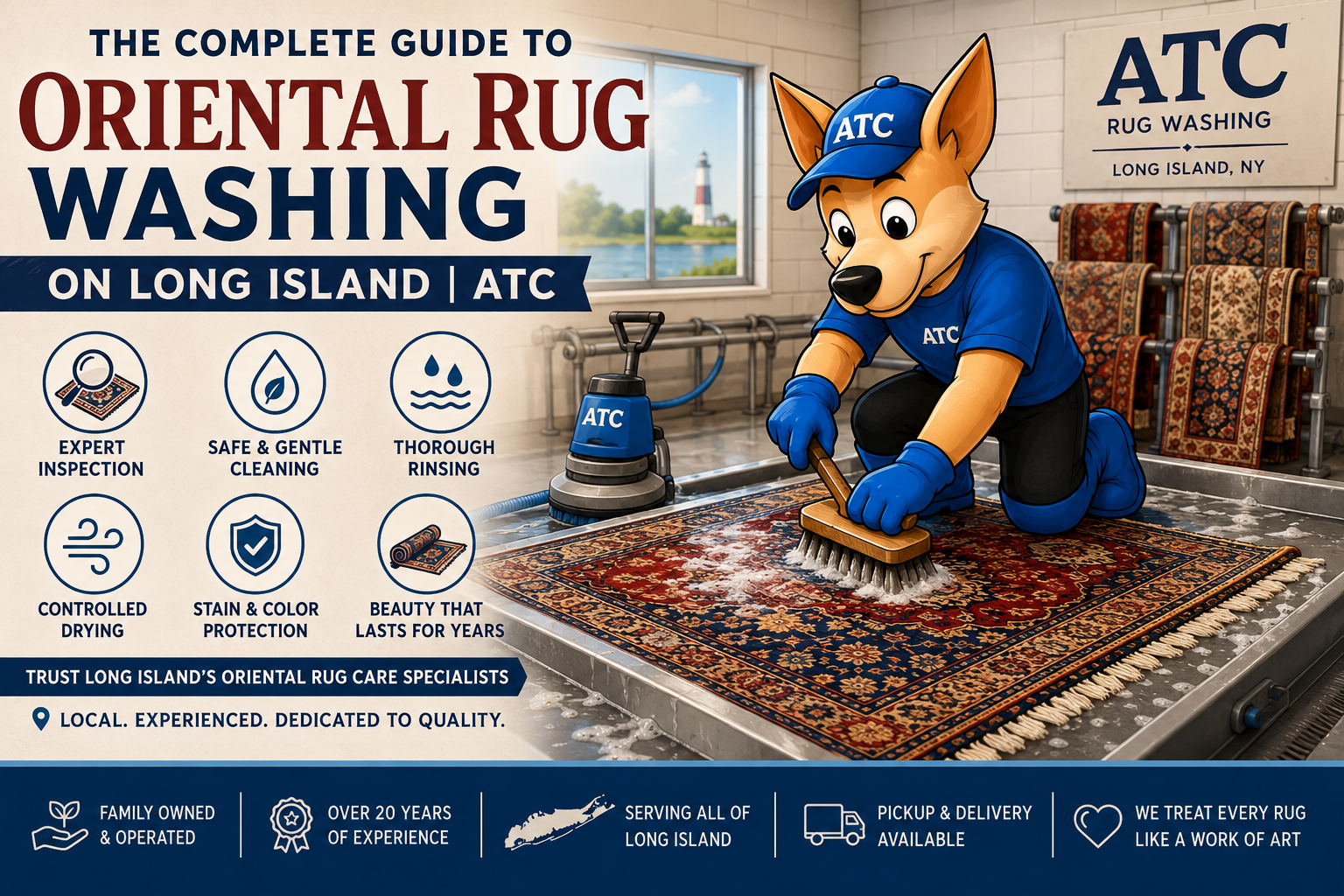
Oriental Rug Washing on Long Island: Why Surface Cleaning Is Not Always Enough
Professional Oriental rug washing on Long Island provides access to the entire rug. When the rug’s construction and condition allow, it can be dusted, washed from both sides, thoroughly rinsed, centrifuge-extracted, and dried inside a controlled environment.
Quick Answer: What Is Oriental Rug Washing?
Oriental rug washing is a facility-based cleaning process that treats the rug as a complete textile. It generally includes inspection, fiber and dye evaluation, professional dusting, front-and-back washing, rinsing, water extraction, controlled drying, grooming, and final inspection.
How Is Oriental Rug Washing Different From Surface Cleaning?
The following table explains the main differences.
Cleaning factor | Facility-based Oriental rug washing | In-home surface cleaning |
Access to the rug | Front, back, pile, fringe, edges, and foundation can be examined | Work is usually performed from the visible face |
Dry-soil removal | Specialized dusting releases embedded particles before washing | Usually limited to surface vacuuming |
Cleaning method | The rug may be completely washed when its condition allows | Commonly uses hot-water extraction or low-moisture cleaning |
Soil removal | Addresses material within the pile and foundation | Primarily addresses accessible surface soil |
Pet urine treatment | Contamination can be flushed from affected fibers | Treatment may not reach the foundation or back |
Rinsing | Released soil and cleaning solutions can be thoroughly rinsed away | Water use and rinsing are restricted by the home environment |
Water extraction | A centrifuge can remove approximately 90% to 95% of remaining moisture | Moisture is removed with surface extraction equipment |
Drying | Completed in a controlled facility environment | Usually completed inside the customer’s home |
Appropriate rugs | Handmade, Oriental, Persian, wool, and heavily contaminated rugs when inspection permits | Certain durable rugs needing maintenance cleaning |
The appropriate method depends on the individual rug. Facility washing provides more control, but the cleaner should inspect the rug before recommending full washing.
Why Does an Oriental Rug Hold So Much Soil?
Grit trapped inside the rug can contribute to wear. The particles rub against fibers whenever someone walks across the surface. This abrasion gradually affects the pile and can make the rug’s colors appear dull.
Why Is Professional Dusting the First Major Step?
Washing an oriental rug before removing dry soil can turn the remaining particles into mud inside the foundation. That makes the material harder to remove and reduces the effectiveness of the wash.
What Happens Before an Oriental Rug Is Washed?
The cleaning process begins with inspection. A professional should identify the rug’s construction, fibers, dyes, condition, contamination, and existing damage before selecting a method.
The inspection should examine:
- Pile fiber
- Foundation material
- Construction method
- Fringe and side cords
- Dye stability
- Existing color movement
- Worn or missing pile
- Previous repairs
- Pet contamination
- Stains and odor
- Moth activity
- Water damage
- Dry rot
- Latex or adhesive deterioration
Existing conditions should be documented with notes or photographs. Cleaning can expose wear or damage that was previously hidden by soil, furniture, or matted pile.
If the inspection changes the recommended procedure, price, or expected outcome, the cleaner should contact the customer before washing begins.
How Does ATC Wash Oriental Rugs?
ATC’s process may be adjusted for the individual rug, but facility washing generally follows seven stages.
Pre-Inspection and Documentation
This creates the cleaning plan and establishes realistic expectations before the rug enters the wash process.
Fiber and Dye Evaluation
Areas of concern are evaluated for potential dye movement. Rugs containing unstable colors, weakened fibers, silk, viscose, previous dye migration, or age-related deterioration may require additional precautions.
Professional Dry-Soil Removal
Washing
When the rug’s condition permits, the front and back are washed to release attached soil, body oils, spills, cleaning residue, and contamination.
Rinsing
Thorough rinsing is especially important when the rug contains pet urine, odor-producing residue, heavy soil, or excessive detergent from a previous cleaning attempt.
Centrifuge Extraction
Grooming, Controlled Drying, and Inspection
Can Every Oriental Rug Be Fully Washed?
- Unstable dyes
- Dry rot
- Foundation weakness
- Severe age-related deterioration
- Fragile repairs
- Certain silk or viscose fibers
- Existing dye migration
- Adhesive or latex components
- Water damage
- Extensive moth damage
- Painted or chemically altered details
A qualified facility should be able to adjust water exposure, chemistry, agitation, rinsing, extraction, and drying according to the rug.
Is Oriental Rug Washing Safe for Wool?
Wool rugs can also hold substantial amounts of dry soil without looking severely dirty. This makes dusting and thorough rinsing particularly important.
Can Silk Oriental Rugs Be Washed?
These materials can react differently to moisture, agitation, chemistry, and grooming. Some may develop texture changes, shading, stiffness, or color movement if handled incorrectly.
The cleaner should explain the recommended process and any elevated risk before beginning.
Can Oriental Rug Washing Remove Pet Urine?
Pet urine is one of the strongest reasons to choose facility washing when the rug can tolerate it.
Can Rug Washing Remove Every Stain?
Professional Oriental rug washing can remove substantial soil and improve many spots, but no responsible cleaner should promise that every stain will disappear.
- The substance
- How long it remained in the rug
- Fiber content
- Dye stability
- Previous cleaning attempts
- Household chemicals applied
- Heat exposure
- Sun exposure
- Structural damage
A lighter stain may be a better outcome than damage caused by overly aggressive treatment.
Why Is Thorough Rinsing Important?
Why Does a Centrifuge Improve the Drying Process?
- Shorter drying time
- Better control over dye movement
- Lower risk of recurring odor
- Reduced opportunity for mildew
- More even drying
- Less time in a heavily saturated state
How Is an Oriental Rug Dried After Washing?
The rug should not be wrapped until the final inspection confirms that it is completely dry.
How Often Should Oriental Rugs Be Washed?
There is no universal washing schedule. The appropriate frequency depends on the rug’s location, traffic, pets, children, outdoor soil, spills, and maintenance.
A rug in a formal room may remain clean longer than a living-room rug used every day. Entry rugs and runners usually collect soil faster than bedroom rugs.
Signs that a rug may need professional attention include:
- Colors look dull after vacuuming.
- Dust appears when the rug is moved.
- Pet odor returns during humid weather.
- The pile feels sticky, stiff, or matted.
- Spots repeatedly return.
- Fringe has become heavily soiled.
- The rug has experienced a spill or leak.
- Pet accidents have reached the foundation.
- Loose fibers or possible moth activity appear.
How Much Does Oriental Rug Washing Cost on Long Island?
Additional services may include:
- Pet urine treatment
- Odor removal
- Specialty stain treatment
- Moth treatment
- Dye correction
- Repairs
- Fiber protection
- Custom-cut padding
- Pickup and delivery
The estimate should explain what is included in standard washing and which recommended treatments carry an additional charge.
A low starting price does not reveal whether the service includes dusting, front-and-back washing, complete rinsing, centrifuge extraction, and controlled drying. Compare the full process rather than the opening number alone.
How Should You Choose a Long Island Rug-Washing Facility?
Ask where the rug will be cleaned and whether the company’s own employees perform the work. Some companies subcontract rug washing without clearly explaining who is responsible for the rug.
Ask whether the process includes professional dusting. Surface vacuuming is not the same procedure.
Ask how fibers and dyes are evaluated. The cleaner should discuss the individual rug rather than claiming every Oriental rug receives the same method.
Ask how the rug is rinsed, how moisture is extracted, and where drying takes place. These stages reveal whether the company offers complete facility washing or primarily surface cleaning.
The company should also document existing damage and communicate any changes to the estimate before proceeding.
Why Choose ATC for Oriental Rug Washing on Long Island?
ATC operates a dedicated rug-washing facility in Farmingdale. Our team handles inspection, dye evaluation, dusting, front-and-back washing, rinsing, centrifuge extraction, grooming, controlled drying, and final inspection.
Every rug is evaluated individually. We explain what the rug needs, what the process can reasonably accomplish, and what existing conditions may limit the final result.
Where Is Oriental Rug Washing Available on Long Island?
- Farmingdale
- Massapequa
- Levittown
- Garden City
- Great Neck
- Glen Cove
- Syosset
- Oyster Bay
- Jericho
- Huntington
- Northport
- Babylon
- Islip
- Smithtown
- Setauket
Customers can also arrange to bring rugs directly to our Farmingdale facility.
Schedule Oriental Rug Washing on Long Island
If your rug looks dull, holds an odor, has experienced pet accidents, or has not been professionally washed in years, ATC can inspect it and recommend an appropriate process.
Request an estimate through
Frequently Asked Questions
Is Oriental Rug Washing Better Than Steam Cleaning?
Do All Oriental Rugs Need Full-Submersion Washing?
Can Oriental Rug Washing Remove Pet Odor?
Can ATC Wash Persian Rugs?
Yes. ATC cleans Persian, Oriental, wool, silk, hand-knotted, antique, synthetic, and other area rugs. The process is selected after inspection.
How Long Does Oriental Rug Washing Take?
Turnaround depends on the rug’s size, fibers, construction, condition, treatments, and drying requirements. A more accurate timeframe can be provided after inspection.
Does ATC Provide Pickup and Delivery?
About the Author
Pat Santoro Jr., Master Textile Cleaner and Owner of ATC Rug Washing
Pat Santoro Jr. is a third-generation cleaning-business owner and Master Textile Cleaner based on Long Island. He owns Around The Clock (ATC) Rug Washing, a dedicated rug-washing and specialty textile-care company in Farmingdale, New York.
Pat built training and operating systems that allow the ATC team to evaluate rugs individually and follow a consistent cleaning process.
He is also a co-founder of the Textile Cleaning and Restoration Education Institute. TCREI was established to advance technical education and professional standards for cleaners working with rugs, carpets, upholstery, and specialty textiles.
Through ATC, Pat helps Long Island homeowners, interior designers, cleaners, and restoration professionals make informed decisions about rug and textile care.
Reviewed and updated: July 2026

