

Can a Carpet Cleaner Be Used on an Area Rug?
July 27th, 2026
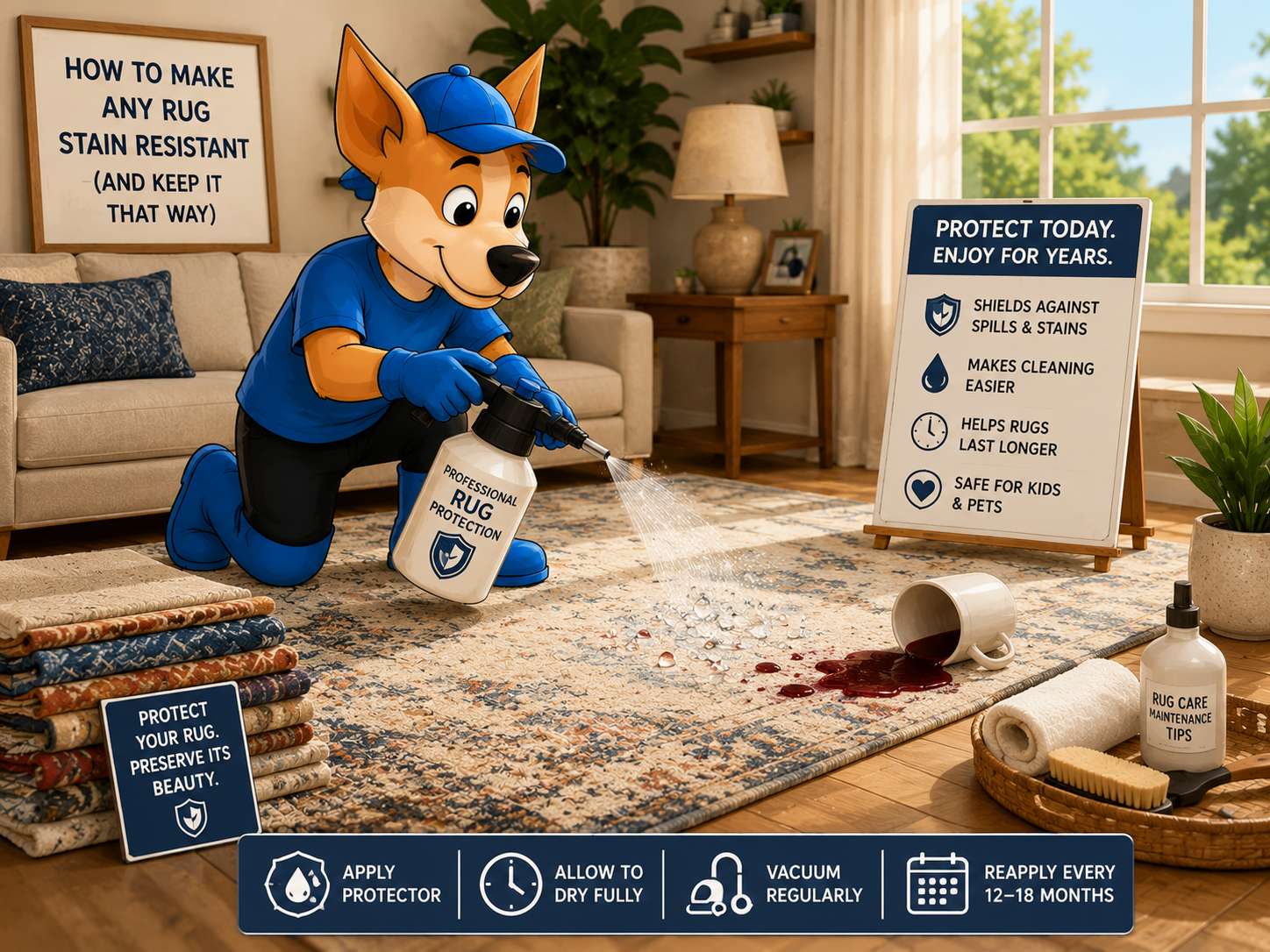
The short answer: sometimes, but usually not — and if you own anything made of wool, silk, cotton, or anything hand-knotted, the answer is a hard no.
Why Carpets and Area Rugs Are Not the Same Thing
Wall-to-wall carpet is manufactured with a synthetic backing (usually polypropylene or jute), machine-tufted into place, and designed to be cleaned from the top down. The fibers — almost always nylon or polyester — are engineered to handle moisture and strong detergents. Dirt sits at the surface and in the upper fiber layer, which is exactly where carpet cleaning machines are designed to reach.
Area rugs — especially hand-knotted Orientals, Persians, wool rugs, and any natural-fiber piece — are constructed entirely differently. The dirt in an area rug doesn’t just sit on top. It works its way down through the pile and gets trapped in the foundation, which is typically a tightly woven warp-and-weft structure made of cotton, wool, or linen. That foundation holds the entire rug together. To clean a rug properly, you have to get into that foundation and flush the dirt out — not push it around from the top.
What Actually Happens When a Carpet Cleaner Runs Over an Area Rug
Here’s the sequence we see most often when a carpet cleaner treats an area rug in your home:
The surface gets wet, but the foundation doesn’t get clean. Hot water extraction and steam cleaning push moisture into the rug, but the machine’s suction isn’t powerful enough to pull it back out of a tightly woven foundation. The grit and soil at the base of the rug absorbs that moisture, mixes with the cleaning solution, and hardens into a plaster-like residue at the bottom of the fibers. That residue acts like sandpaper every time someone walks across the rug — cutting the foundation threads from the inside out and accelerating wear in a way that’s nearly impossible to reverse.
The dyes get compromised. Natural dyes used in Persian, Turkish, and Indian hand-knotted rugs are not colorfast in the same way synthetic carpet dyes are. Hot water from a carpet cleaning machine — combined with the high-pH detergents formulated for nylon — can cause the dyes to loosen and bleed into each other. This is irreversible. A $3,000 rug can come back from an in-home carpet cleaning with a streaked, muddied, or completely altered color profile. We’ve received those rugs. Restoration is expensive, and the rug’s value is never fully recovered.
The dyes get compromised. Natural dyes used in Persian, Turkish, and Indian hand-knotted rugs are not colorfast in the same way synthetic carpet dyes are. Hot water from a carpet cleaning machine — combined with the high-pH detergents formulated for nylon — can cause the dyes to loosen and bleed into each other. This is irreversible. A $3,000 rug can come back from an in-home carpet cleaning with a streaked, muddied, or completely altered color profile. We’ve received those rugs. Restoration is expensive, and the rug’s value is never fully recovered.
Moisture gets trapped and mold takes hold. A carpet laid on a subfloor has airflow beneath it. An area rug lying on a hardwood floor has none. Carpet cleaning machines saturate the foundation with water, and that water has nowhere to go. The outer fibers dry in a few hours. The interior of the foundation can stay wet for days — enough time for mold and mildew to establish in the base of the rug. The rug that comes back from a carpet cleaning often smells fine at first. A few weeks later, it carries a musty odor that no amount of baking soda will touch.
Fringe gets destroyed. If your rug has fringe — and most traditional Oriental and Persian rugs do — a carpet cleaning machine’s rotating brush is essentially a guaranteed fringe disaster. We have seen fringes completely unravel within two weeks of a carpet cleaning machine being run over them.
The Rug Types That Are Most at Risk
Wool rugs — High risk. Wool is protein-based and pH-sensitive. Alkaline detergents damage the fiber’s cuticle layer, causing brittleness and matting. Hot water causes shrinkage. These rugs should only ever be washed in cool water with wool-safe, pH-neutral chemistry.
Silk rugs — Extreme risk. Silk is one of the most delicate natural fibers in existence. Moisture, heat, and agitation are all enemies of silk. A carpet cleaner run over a silk rug — even once — can permanently flatten the pile, cause fiber collapse, and destroy the sheen that makes silk rugs valuable. Do not attempt any machine cleaning on a silk rug. Period.
Hand-knotted Persian and Oriental rugs — Extreme risk. These are typically wool or silk on a cotton foundation. They are works of art made by hand. The foundation threads are the structural integrity of the entire piece. Once those threads are weakened by moisture, residue buildup, or aggressive brushing, the rug begins to delaminate and fall apart from the inside. Repairs are labor-intensive, costly, and never quite the same as the original.
Cotton rugs — High risk. Cotton is extremely absorbent and holds moisture far longer than synthetic fibers. Wet cotton foundations are one of the primary causes of mold growth and browning after in-home cleaning.
Jute and sisal rugs — Very high risk. These natural plant fibers are highly sensitive to moisture and will brown, warp, and deteriorate with any wet cleaning method. Jute in particular is prone to cellulosic browning — a yellow or brown discoloration caused by oxidation of the plant-based cellulose when exposed to water.
Jute and sisal rugs — Very high risk. These natural plant fibersSynthetic rugs (polypropylene, nylon, polyester) — Lower risk. If your rug is made entirely of synthetic fibers and is machine-made, a carpet cleaning machine is less likely to cause catastrophic damage. That said, the foundation moisture issue still applies, and improper drying can still cause mold. Proceed with caution, not confidence. are highly sensitive to moisture and will brown, warp, and deteriorate with any wet cleaning method. Jute in particular is prone to cellulosic browning — a yellow or brown discoloration caused by oxidation of the plant-based cellulose when exposed to water.
What Proper Rug Washing Actually Looks Like
1. Full inspection and dye stability testing. Before any water touches the rug, it should be examined for pre-existing damage, fiber type, and dye stability. We test every rug for color fastness before it enters our wash floor. This step alone prevents most of the disasters people walk in with after a bad carpet cleaning experience.
2. Thorough dusting. The grit and debris in a rug’s foundation must be mechanically beaten and dusted out before the rug gets wet. Proper rug dusting equipment vibrates and agitates the foundation from the back, displacing years’ worth of embedded particulate. In some rugs we wash, the amount of dry soil removed before washing is genuinely shocking.
3. Full submersion washing. The rug must be completely submerged in water to truly flush the foundation. At ATC, we use a full submersion wash process where the rug is saturated entirely, worked through with the appropriate chemistry for that specific fiber type, and rinsed until the water runs clear. This is the only method that actually removes what’s in the foundation — not just what’s on top of it.
4. Controlled, forced-air drying. After washing, the rug must be dried quickly and completely. Professional rug facilities use centrifugal water extractors and climate-controlled forced-air drying systems. The goal is to have the foundation fully dry within hours, not days.
5. Final inspection and grooming. Once dry, the pile is groomed back in the direction of the lay, the fringe is combed out, and the rug is inspected one final time before it goes back to the customer.
That is what your rug deserves. It’s also why we built our facility and process the way we did.
A Note on Carpet Cleaners Who Offer to Do Your Rugs
Our advice: politely decline. If your carpet cleaner is great at carpet, use them for the carpet. For your area rugs — especially anything with value, monetary or sentimental — bring in a rug specialist.
Frequently Asked Questions
Can I use a Bissell or Hoover carpet cleaner on my area rug?
My carpet cleaner said they clean rugs all the time. Should I trust them?
What if the rug is old and cheap? Does it still matter?
My rug smells musty after my carpet cleaner did it. What happened?
Can a professional rug cleaner fix what a carpet cleaner damaged?
How often should an area rug be professionally washed?
Does ATC pick up and deliver area rugs?
About the Author
ATC Rug Washing serves Nassau and Suffolk County, Long Island, NY. Free pickup and delivery available 7 days a week. Call or text (631) 270-4254.

